

Sex on Campus
Identity-
100 % Free
Identity
Politics
A report from
the agender,
aromantic, asexual
top line.
Pictures by
Elliott Brown, Jr.
NYU course of 2016
“At this time, we point out that Im agender.
I am getting rid of me through the social construct of sex,” states Mars Marson, a 21-year-old NYU movie significant with a thatch of small black tresses.
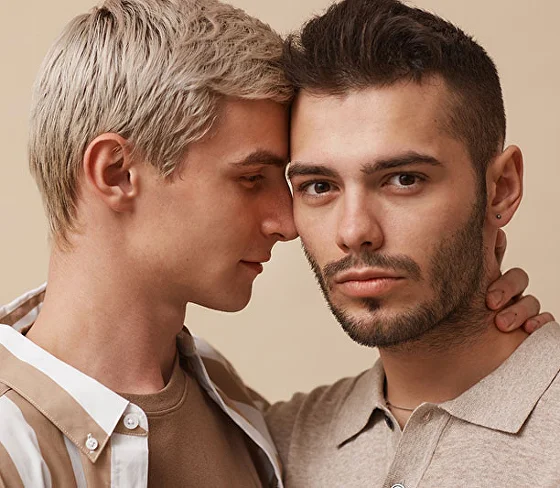
Marson is conversing with me personally amid a roomful of Queer Union college students within school’s LGBTQ pupil middle, in which a front-desk container supplies complimentary keys that let site visitors proclaim their own favored pronoun. With the seven pupils gathered at Queer Union, five choose the single
they,
supposed to signify the type of post-gender self-identification Marson talks of.
Marson was given birth to a woman naturally and was released as a lesbian in high school. But NYU was actually a revelation â a place to understand more about transgenderism and then deny it. “I do not feel connected to the word
transgender
since it seems more resonant with digital trans folks,” Marson claims, discussing individuals who like to tread a linear path from female to male, or vice versa. You might say that Marson plus the different students from the Queer Union identify as an alternative with getting somewhere in the midst of the way, but that’s nearly correct either. “In my opinion âin the center’ however throws male and female as the be-all-end-all,” says Thomas Rabuano, 19, a sophomore drama major whom wears makeup products, a turbanlike headband, and a flowy blouse and dress and cites Lady Gaga and gay character Kurt on
Glee
as large teenage part designs. “i love to consider it as outside.” Everybody in the group
mm-hmmm
s acceptance and snaps their own hands in accord. Amina Sayeed, 19, a sophomore from Diverses Moines, agrees. “conventional ladies clothes are feminine and colourful and emphasized the fact that I had breasts. I disliked that,” Sayeed says. “Now we claim that I’m an agender demi-girl with connection to the female digital gender.”
Throughout the far edge of campus identification politics
â the places when occupied by lgbt college students and later by transgender types â you now select pockets of college students such as these, young people for whom tries to classify identification experience anachronistic, oppressive, or perhaps painfully unimportant. For more mature generations of gay and queer communities, the challenge (and pleasure) of identification exploration on university can look somewhat common. But the distinctions today are hitting. The present task isn’t only about questioning an individual’s very own identity; it’s about questioning ab muscles character of identity. You might not end up being a boy, however you is almost certainly not a girl, possibly, as well as how comfortable are you currently with all the concept of becoming neither? You may want to sleep with men, or ladies, or transmen, or transwomen, therefore should be mentally involved with them, as well â but perhaps not in the same blend, since why must the enchanting and sexual orientations fundamentally have to be the exact same thing? Or why contemplate orientation anyway? The appetites can be panromantic but asexual; you could determine as a cisgender (maybe not transgender) aromantic. The linguistic options are almost limitless: a good amount of vocabulary meant to articulate the part of imprecision in identity. And it is a worldview that is very much about words and thoughts: For a movement of young people driving the borders of desire, could feel remarkably unlibidinous.
A Glossary
The Advanced Linguistics in the Campus Queer Movement
Several things about gender have not altered, and never will. But also for those of us exactly who went to college decades ago â if not a few years back â a number of the most recent sexual language tends to be unfamiliar. Here, a cheat sheet.
Agender:
an individual who identifies as neither male nor female
Asexual:
somebody who does not enjoy sexual desire, but whom may experience passionate longing
Aromantic:
somebody who doesn’t discover passionate longing, but does knowledge libido
Cisgender:
not transgender; hawaii where sex you determine with fits the only you were assigned at delivery
Demisexual:
individuals with limited sexual interest, normally thought merely relating to deep psychological link
Gender:
a 20th-century restriction
Genderqueer:
an individual with an identification outside of the traditional sex binaries
Graysexual:
a far more wide term for someone with restricted sexual desire
Intersectionality:
the belief that gender, competition, course, and intimate direction shouldn’t be interrogated alone from a single another
Panromantic:
somebody who is romantically thinking about anybody of any gender or direction; this does not necessarily connote associated intimate interest
Pansexual:
someone who is actually intimately into anybody of every sex or orientation
Reporting by
Allison P. Davis
and
Jessica Roy
Robyn Ochs, an old Harvard manager who was on class for 26 many years (and whom began the college’s party for LGBTQ professors and employees), views one significant reason why these linguistically complex identities have abruptly become so popular: “we ask young queer individuals how they learned the labels they describe on their own with,” states Ochs, “and Tumblr could be the No. 1 solution.” The social-media system provides produced so many microcommunities global, such as Queer Muslims, Queers With Disabilities, and Trans Jewry. Jack Halberstam, a 53-year-old self-identified “trans butch” teacher of gender scientific studies at USC, especially cites Judith Butler’s 1990 guide,
Gender Trouble,
the gender-theory bible for campus queers. Prices from this, like a lot reblogged “There’s no sex identity behind the expressions of gender; that identity is actually performatively constituted from the really âexpressions’ being said to be the outcomes,” became Tumblr bait â perhaps the earth’s minimum likely widespread material.
However, many associated with the queer NYU students we spoke to didn’t become truly acquainted with the vocabulary they today use to explain on their own until they attained college. Campuses tend to be staffed by managers which arrived old in the first trend of governmental correctness as well as the height of semiotics-deconstruction mania. In school now, intersectionality (the theory that race, course, and gender identity all are connected) is actually main for their means of recognizing just about everything. But rejecting groups altogether tends to be seductive, transgressive, a good way to win an argument or feel special.
Or possibly which is too cynical. Despite just how intense this lexical contortion may seem to some, the students’ wants to determine themselves beyond sex decided an outgrowth of acute disquiet and strong marks from becoming increased during the to-them-unbearable part of “boy” or “girl.” Creating an identity that will be defined by what you
are not
does not seem specifically easy. I ask the students if their new social permit to determine on their own outside of sex and gender, when the pure plethora of self-identifying options they usually have â instance myspace’s much-hyped 58 sex alternatives, sets from “trans person” to “genderqueer” on the vaguely French-sounding “neutrois” (which, relating to neutrois.com, shouldn’t be identified, ever since the really point of being neutrois is the gender is specific to you) â sometimes leaves them feeling as if they’re boating in area.
“I feel like i am in a chocolate store and there’s every one of these different choices,” claims Darya Goharian, 22, a senior from an Iranian household in a wealthy D.C. suburb whom determines as trans nonbinary. But also the word
options
is generally too close-minded for some in the class. “I grab problem with this term,” says Marson. “It makes it look like you are choosing to be some thing, when it’s not a selection but an inherent element of you as someone.”
Amina Sayeed identifies as an aromantic, agender demi-girl with connection to the female binary gender.
Pic:
Elliott Brown, Jr., NYU class of 2016
Levi straight back, 20, is a premed who was simply very nearly knocked from public high school in Oklahoma after developing as a lesbian. The good news is, “I determine as panromantic, asexual, agender â of course you wanna shorten every thing, we can only get as queer,” right back claims. “I really don’t experience sexual attraction to anyone, but i am in a relationship with another asexual person. Do not have sex, but we cuddle always, kiss, make-out, hold hands. Everything you’d see in a PG rom-com.” Right back had previously outdated and slept with a woman, but, “as time proceeded, I was much less into it, plus it turned into similar to a chore. After all, it believed good, however it failed to feel like I became creating a stronger hookup through that.”
Now, with again’s current girlfriend, “lots of why is this relationship is actually our psychological link. And how open we’re with each other.”
Back has begun an asexual team at NYU; anywhere between ten and 15 folks generally appear to meetings. Sayeed â the agender demi-girl â is one of all of them, as well, but identifies as aromantic instead of asexual. “I got had sex once I became 16 or 17. Women before men, but both,” Sayeed says. Sayeed continues to have sex periodically. “But I do not experience any kind of intimate attraction. I experienced never understood the technical term for this or whatever. I am nevertheless able to feel love: i enjoy my buddies, and I like my children.” But of slipping
in
love, Sayeed states, without having any wistfulness or question that might transform later in daily life, “I guess i recently do not understand why I ever before would at this time.”
A great deal of the personal politics of history was about insisting on the straight to rest with any person; now, the sexual drive appears these a minimal section of present politics, which include the authority to say you really have little to no aspire to rest with anybody at all. Which will seem to run counter towards the more traditional hookup society. But instead, possibly this is basically the then rational step. If connecting has completely decoupled intercourse from love and thoughts, this motion is actually making clear you could have love without intercourse.
Although the getting rejected of sex is certainly not by option, necessarily. Maximum Taylor, a 22-year-old transman junior at NYU who also identifies as polyamorous, states it’s been tougher for him as of yet since the guy started using human hormones. “I can’t choose a bar and choose a straight woman and get a one-night stand quickly any longer. It can become this thing where basically want to have a one-night stand i must describe I’m trans. My swimming pool men and women to flirt with is my personal society, in which many people understand both,” states Taylor. “primarily trans or genderqueer folks of color in Brooklyn. It feels like I’m never gonna fulfill someone at a grocery shop once again.”
The complex vocabulary, also, can work as a layer of protection. “you can aquire really comfortable only at the LGBT center and get regularly people inquiring your pronouns and everybody knowing you’re queer,” claims Xena Becker, 20, a sophomore from Evanston, Illinois, just who determines as a bisexual queer ciswoman. “But it’s nevertheless truly lonely, hard, and complicated a lot of the time. Just because there are many more terms does not mean the feelings tend to be much easier.”
Additional revealing by Alexa Tsoulis-Reay.
*This article appears from inside the Oct 19, 2015 issue of
Ny
Magazine.
Next page: https://lgbtagingadvocacy.org/
